
If the words “wall light” make you picture a frosted-glass half-moon on a magnolia wall, throwing a smear of light at the ceiling of a 1994 living room — yes, that wall light is old-fashioned, and it deserved to go. But it is one design from one decade, and it has done more damage to the idea of a wall light than any fitting should. The wall light people are buying now is a different object doing a different job, and this article is about what changed.
What the old ones got wrong
The uplighter was designed to hide the bulb. Glass or plaster in front, bulb behind, light bounced off the ceiling so nothing in the room was actually lit — just softened. Two of them, one either side of the chimney breast, and the room was “done”. It looked inoffensive on the day it went in and dated within five years, because a fitting whose entire design brief is be unobtrusive ends up looking like whatever was unobtrusive at the time.
There were three specific failures. The materials — pressed steel, moulded glass, gold-effect plastic — did not age, they just wore. The light went the wrong way: up, when nearly every task in a home happens below shoulder height. And the shape was symmetrical and flush, so it could sit anywhere and mean nothing, which is the definition of decoration rather than design.
What replaced them
Look at any interiors magazine, hotel bedroom or restaurant fitted in the last ten years and the wall lights have four things in common that the uplighter did not.
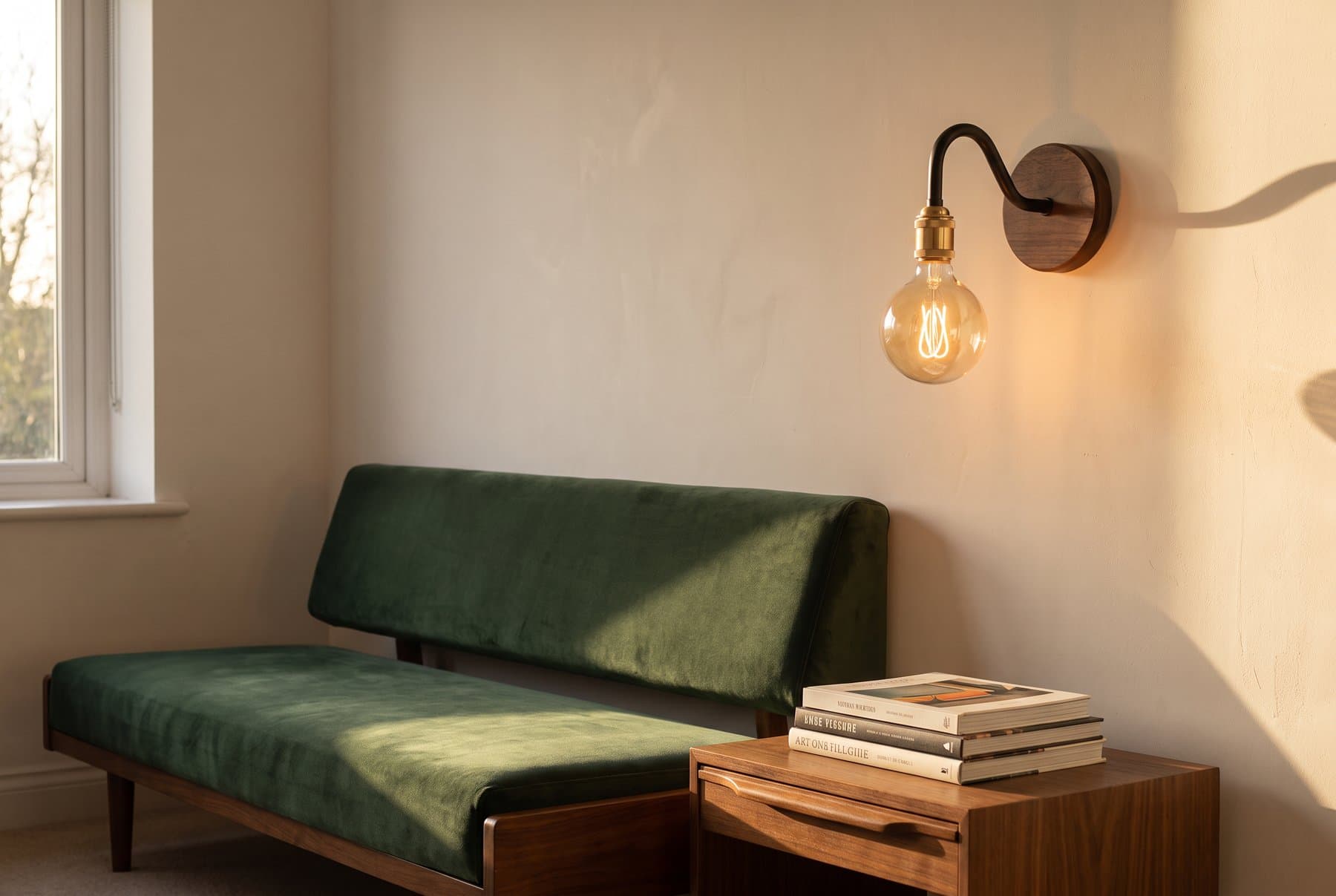
- The bulb is on show. The filament LED made the bulb beautiful again — warm, dimmable, cheap to run — and once the bulb is worth looking at, there is no reason to hide it. An exposed globe on a simple holder is now the most common wall light there is.
- The light points at something. A swan neck, an adjustable arm, a shade tilted down at a bed or a table. Modern wall lights are task lights first: reading, a mirror, a hallway floor.
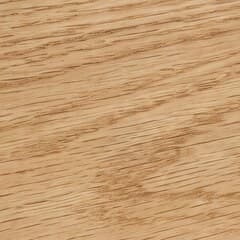
- Real materials. Solid brass that will patinate, matt black steel, turned timber. Things that look better at five years than at five weeks, rather than worse.
- Asymmetry and reach. An arm that comes out from the wall gives the fitting a direction and a shadow, which is what makes it read as an object rather than a panel.
Modern brass wall lights, specifically
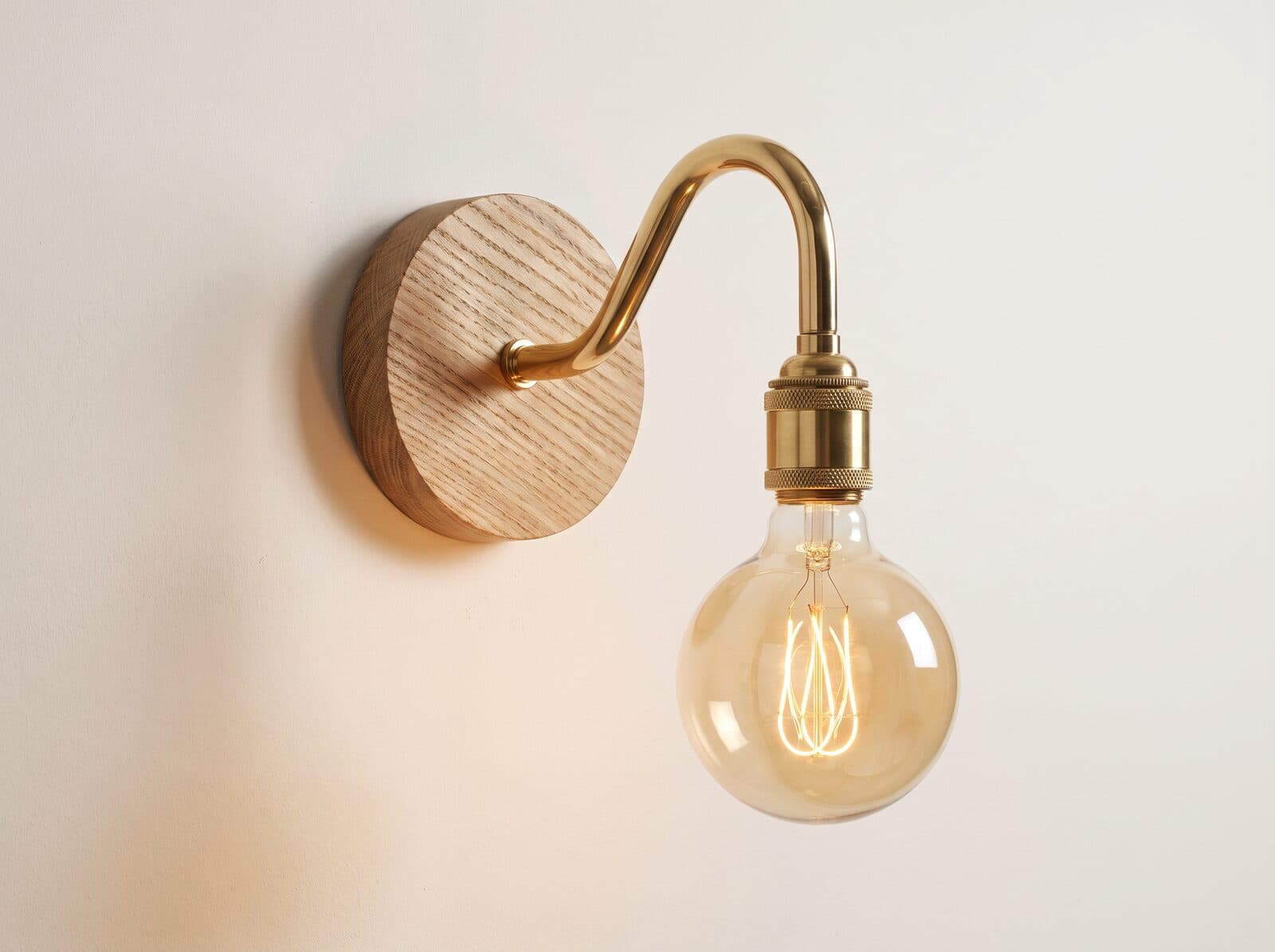
Brass is the finish people worry about most, because “brass” in 1990 meant lacquered gold-effect steel on a swan-shaped uplighter. What has changed is the brass itself and what it sits against. A modern brass wall light is usually polished or brushed real brass, unlacquered or lightly lacquered, paired with black, white or natural wood rather than with more gold. Against a matt black arm or an oak plate, brass reads as one warm detail in the frame instead of the whole frame. That is the difference between jewellery and gilding.
If you are choosing brass and want it to stay modern: match it with a cool or natural material, keep the shape simple, let the bulb show, and avoid anything described as “antique effect” — a sprayed-on age never looks like the real thing, and real brass ages on its own if you let it.
Where wall lights are the right answer now
Not the chimney breast. The places a modern wall light earns its keep are the ones a ceiling light serves badly: either side of a bed, where a downward-pointing arm frees the bedside table and lets one person read while the other sleeps; a hallway or stairwell, where a run of them lights the walls and the treads rather than the middle of the air; above a mirror; beside a sofa in place of a floor lamp; on a landing where the ceiling is too low for a pendant.
The test is simple. If the light has a job — a page, a face, a step — a wall light is modern. If it is there to make a wall less blank, it is the uplighter again, whatever it is made of.
In one line
Wall lights were old-fashioned because one bad design ran for twenty years. The ones being fitted now show the bulb, point the light where it is needed, and are made of things that age well. Start with a wall light that does a job and the question answers itself.