
A ceiling rose is the bit of a pendant light that everyone forgets and everyone sees: the disc against the ceiling where the flex comes out. On most pendants it is a white plastic cup, and it is the reason a £200 shade can still look like a £20 fitting from below. A wooden ceiling rose — a disc of solid oak, beech or walnut — fixes that, and this article covers what one is, what it changes, and how a pendant on a turned wooden rose actually gets fitted in a UK ceiling.
What a wooden ceiling rose is
The word is used for two different things. The decorative plaster rose — the big moulded medallion in a Victorian front room — is one. The other, and the one this article means, is the small cover where a pendant meets the ceiling: the housing the flex hangs from. On our pendant that housing is a disc of solid timber, turned on a lathe, with the flex passing through the centre and the electrical connection made behind it.
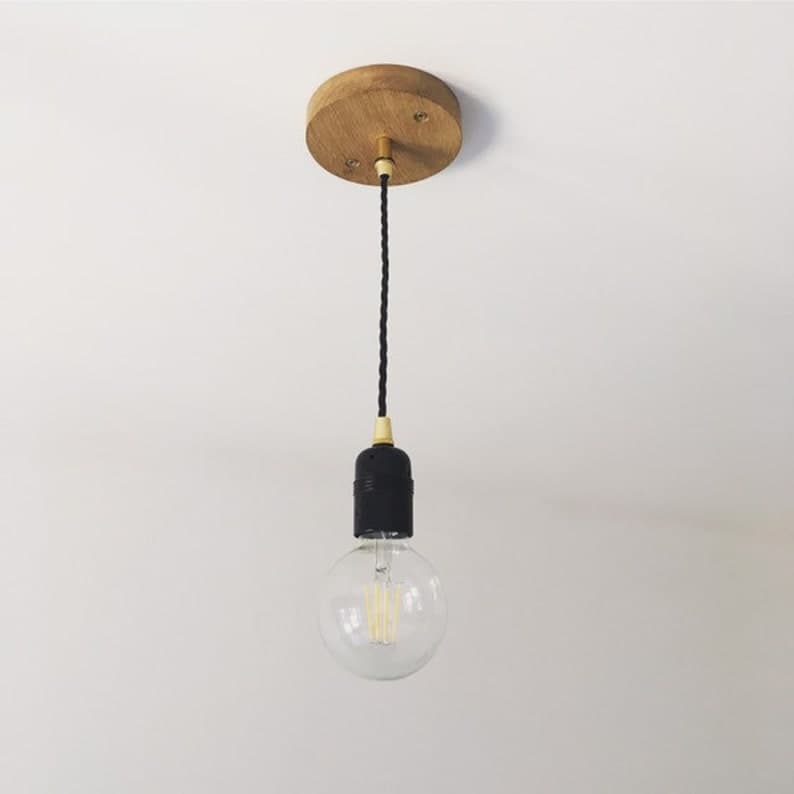
It does two jobs. It covers the hole and the connections, like any rose. And because it is the only part of the pendant that sits against a big plain surface, it is the part that decides whether the fitting looks made or bought. A turned wooden disc, the bulb holder in a matching or contrasting metal and a black twisted fabric flex between them is a complete object; the same holder on a plastic cup is a bulb on a string.
Drop, and how long the flex should be
Ours hangs 30 cm from the ceiling to the bottom of the bulb holder as standard, with the bulb adding its own height below that — around 10 cm for a G95 globe, 13 cm for a G125. That is the right drop for a hallway, a landing or a bedroom, where the fitting is an object on the ceiling rather than something you pass under.
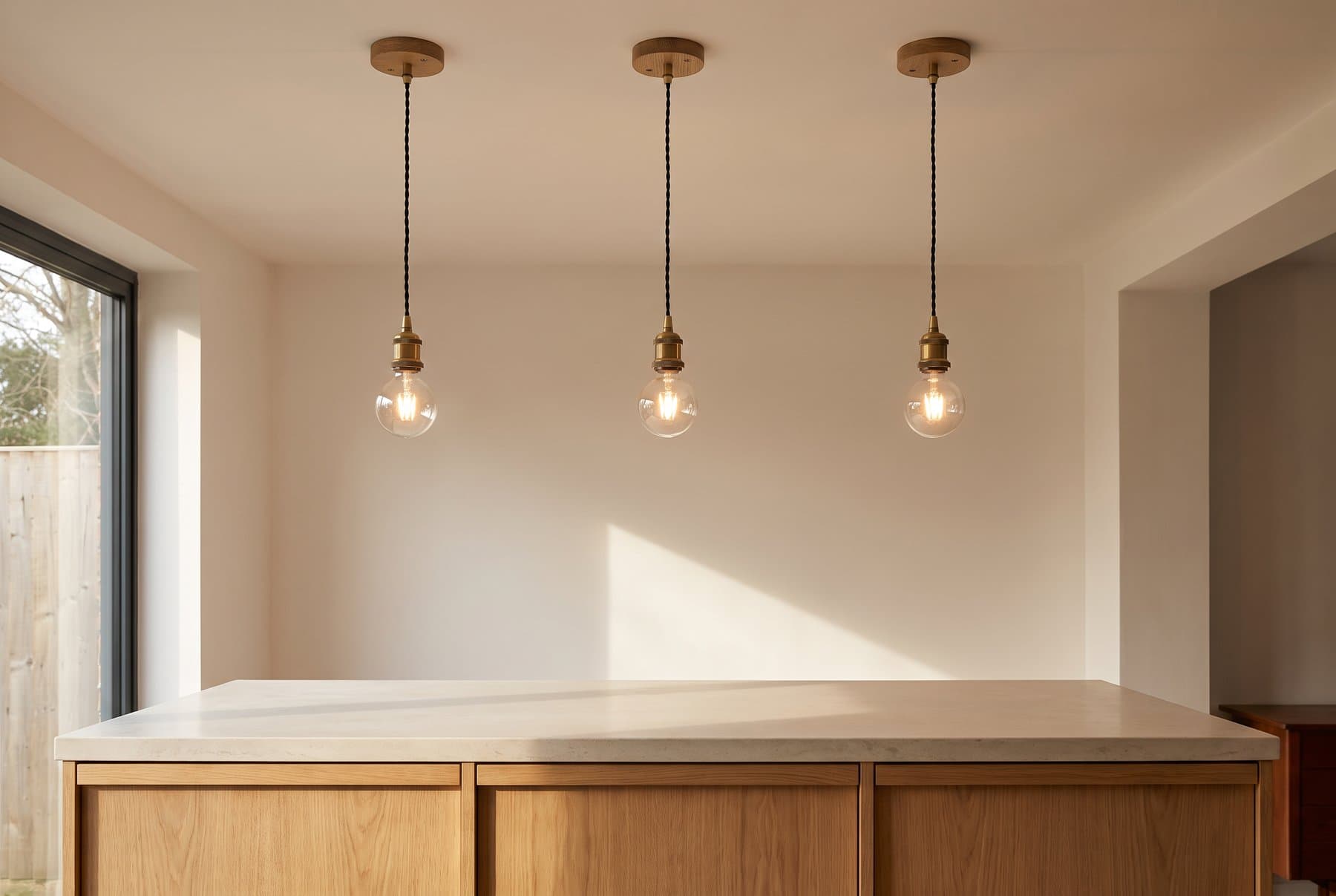
Over a table or a kitchen island the convention is different: the bottom of the bulb about 75–90 cm above the surface, which on a 2.4 m ceiling with a 75 cm table means a drop nearer 60–70 cm. We make longer flexes on request — say what surface it is going over and the ceiling height, and we will cut the flex to suit. Three in a row down an island want to be on 60 cm centres, all at the same height, and a wooden rose on each is what makes a run of three read as one decision.
How a pendant is fitted to a UK ceiling
The usual warning first: this is a mains fitting, and the guidance below is what the job involves, not instruction to do it yourself. If you are not confident isolating and testing a circuit, book an electrician — it is a half-hour job for them.
- Isolate the lighting circuit at the consumer unit, and prove it dead at the existing rose with a tester. Not at the switch: a UK ceiling rose can be live even with the wall switch off, because the circuit loops through it.
- Understand what is in the old rose. Most British ceilings use “loop-in” wiring: the existing plastic rose has three terminal blocks — a row of lives that loop on to the next room, a row of neutrals, and the switched live that actually feeds the lamp — plus earths. Photograph it before you disconnect anything. Those connections all still need a home once the plastic rose is gone.
- Re-house the loop-in connections. This is the step that differs from swapping one plastic rose for another. The loop lives and neutrals go into a suitable maintenance-free connector block or a small junction enclosure in the ceiling void behind the new rose, and only switched live, neutral and earth come down to the pendant. A turned rose has no terminal rows inside it; the block does that job.
- Fix the rose to something solid. A wooden rose plus flex, holder and a globe bulb is light, but it should still be screwed to a joist, a noggin or a proper ceiling-box, not to plasterboard alone. If the old rose was on a joist, the new one goes in the same place.
- Connect, fit the bulb, restore power, test. Any exposed metal — a brass or chrome holder — must be earthed through the fitting.
If the existing wiring turns out to be a single cable with no loop, the job is simpler still. If it turns out to be something you do not recognise, that is the moment to stop.
Oak, beech or walnut on the ceiling
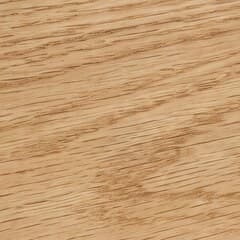
The same three timbers as the wall lights, and the same logic, with one difference: a ceiling is nearly always white, so the rose is seen against white. Walnut reads darkest and most deliberate — a clear dark disc — and is the one to choose when the pendant is a feature. Oak is warm and quietly visible. Beech is the subtlest, and over a white ceiling it can almost vanish, which is right for a landing and wrong for over a dining table.
In one line
A wooden ceiling rose turns a bulb on a flex into a finished object. Fitting one is a standard pendant swap plus re-housing the loop-in connections, and it is an electrician’s half hour if you would rather not. The three woods and three metals are on the wooden pendant lights page.