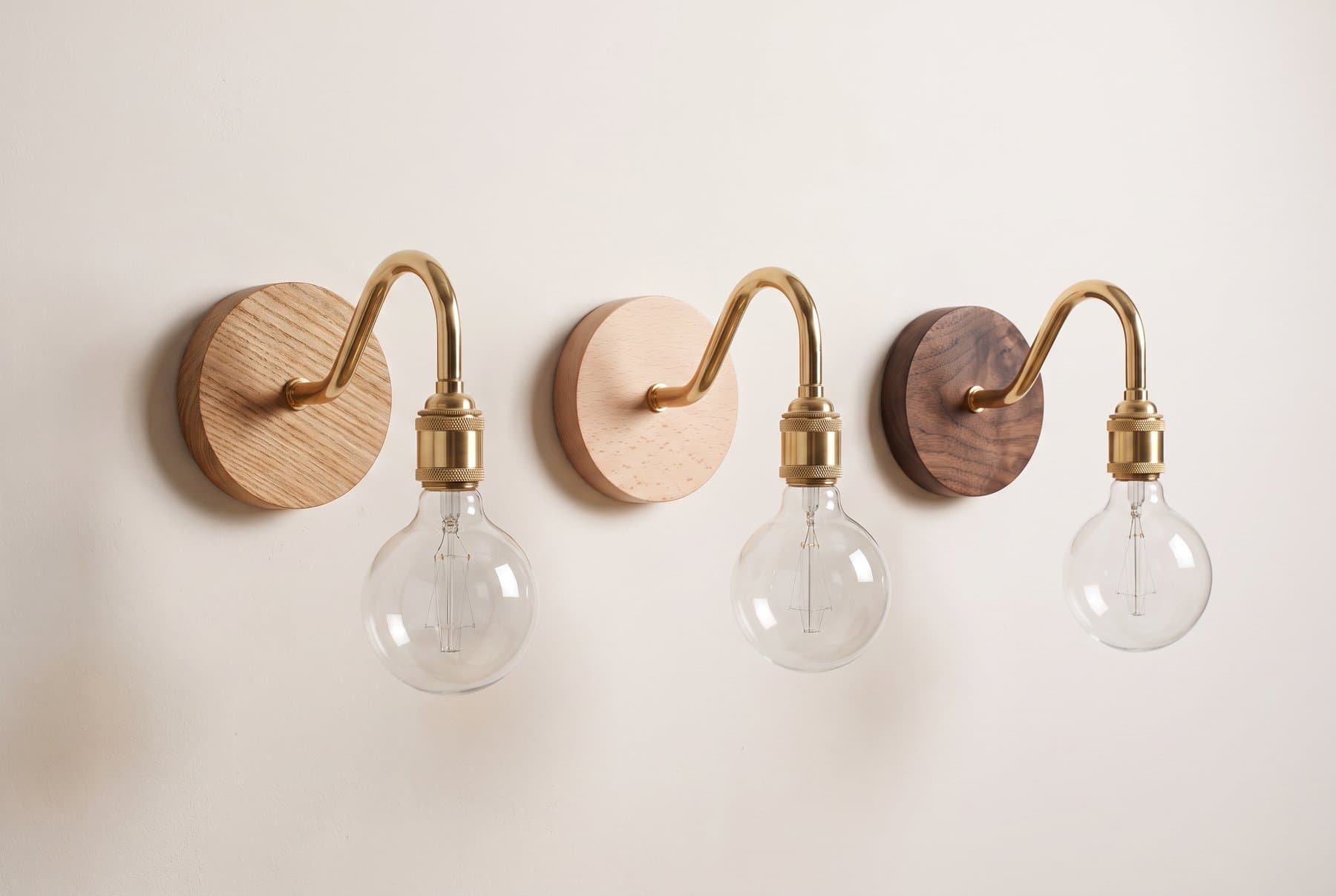
Every wall light we make is built on a disc of solid timber, 14 cm across, turned on a lathe — not veneer over MDF and not a painted steel plate. It is the part that separates these from most wall lights at the price, and it is the part nobody photographs closely enough. So this is the article about the wood: what oak, beech and walnut actually look like, how each one changes the metal you put on it, and how to choose between them for the room you have.
Why solid timber, and why it matters that it is turned
A turned plate is cut from a board, mounted on a lathe and shaped by hand, which means the grain runs right through it and the edge is a real profile rather than a printed one. Two things follow. It ages like furniture — a knock is a knock in wood, not a chip in a finish. And no two are identical: the grain that arrives will not be the grain in the photograph, which is the honest trade for buying something made rather than pressed.
The three woods below are the three we turn. They cost the same, so the choice is entirely about the room.
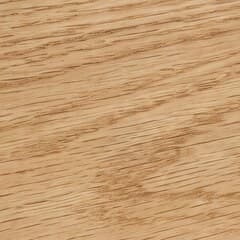
Natural oak
Golden, open-grained, with a straight obvious figure and the odd silvery ray fleck. The warmest of the three and the one most people picture when they picture a wooden light. Safe with brass and copper — two warm materials agreeing — and quietly good with black, where the grain does the work the metal declines to.
Suits: Period houses, warm rooms, anywhere with existing oak floors or furniture.
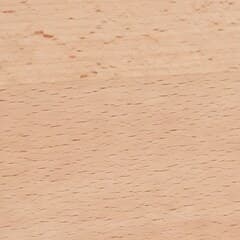
Beech
Paler, finer and slightly pink, with a scattered fleck rather than a grain you can trace. It is the one that keeps a small room feeling light, and the one that makes a black arm look sharpest — the contrast is at its highest against beech. Brass on beech is cooler than brass on oak; chrome on beech is the palest light we make.
Suits: Small rooms, Scandinavian and modern interiors, white or pale walls.

Walnut
Dark chocolate-brown with real figure in it — the only one of the three where the plate is a feature in its own right. Walnut makes any metal look like a deliberate decision: brass reads as jewellery against it, copper goes tonal and rich, black almost disappears into it and leaves the bulb holder as the only bright thing.
Suits: Rooms with dark furniture or dark paint, mid-century interiors, anywhere the light is meant to be noticed.
The wood and the metal, together
The plate is the background the metal sits against, so the same arm reads three different ways. The rule of thumb is contrast for clarity, tone for calm. If you want the shape of the light to be obvious — a black line, a brass curve — put it on the wood furthest from it in tone: black on beech, brass on walnut. If you want the light to settle into the wall and be a warm presence rather than an object, match the tones: brass on oak, black on walnut, copper on oak.
The bulb holder is chosen separately from the arm, and it is the place to introduce the second metal if you want one. A black arm with a brass holder on walnut is the most-photographed combination in the range for a reason: dark on dark, with one bright point where the bulb is.
Choosing for the room, not the catalogue
- Match what is already there. Oak floors or an oak bed: oak. Walnut sideboard: walnut. A room with no wood in it at all: beech, which brings a little without arguing with anything.
- Think about the wall colour. On white, all three show clearly and walnut is the boldest. On a dark wall — navy, forest green, charcoal — oak and beech stand out and walnut recedes, so pick walnut only if you want the metal to be the thing you see.
- Pairs match themselves. Two lights ordered together come from the same batch of timber and will sit closer in colour than two ordered months apart. If you are fitting bedside lights, order the pair at once.
- Do not fear the grain. A plate with a strong figure is not a second; it is what turned timber looks like. The plainest plates are usually beech, the most varied are walnut.
Looking after it
Nothing, mostly. The plates are finished so the grain still reads, and a wipe with a dry cloth is all they need. Keep them out of direct steam — a wall light in a bathroom is a different conversation anyway — and expect oak and walnut to deepen a shade over the first couple of years. Beech stays close to how it arrived.
In one line
Oak is warm and safe, beech is pale and modern, walnut is dark and deliberate. Contrast the metal for clarity, match it for calm. All three are on the wooden wall lights page, one card per combination.